
Same approach. Very different answers.
Every business starts somewhere different. What makes sense depends on what’s already there, what needs to change, and what actually matters.
Here are three examples of what that looked like.

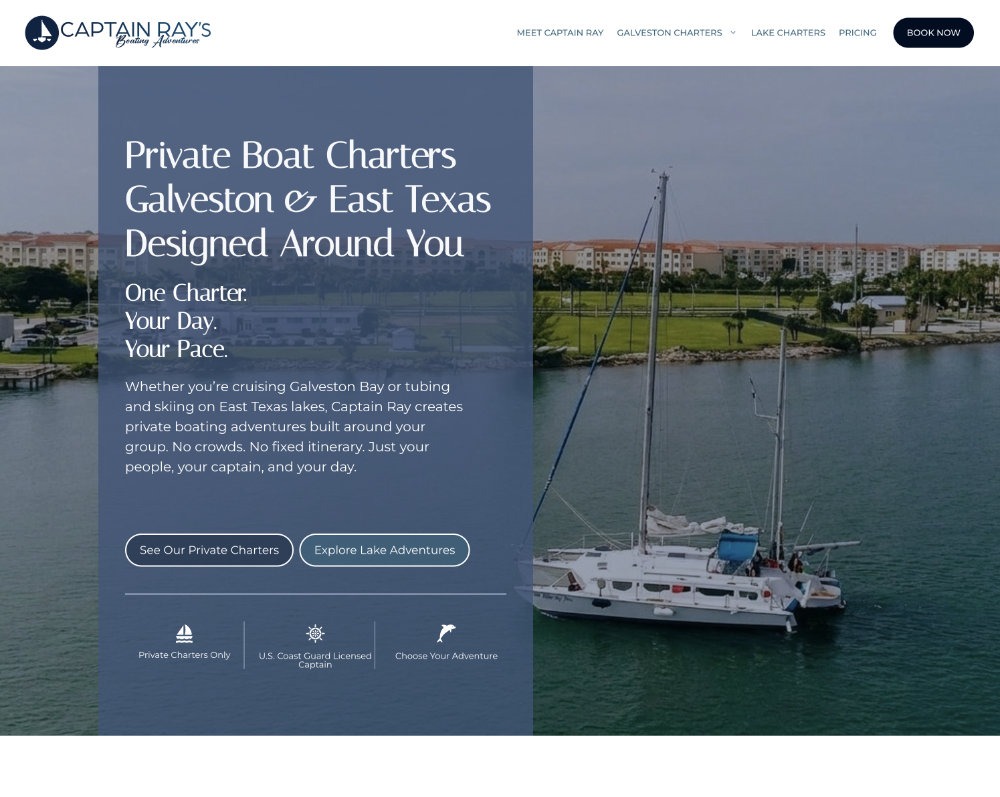
CASE STUDY 01 · CHARTER OPERATIONS & BOOKING
Captain Ray’s Boating Adventures
A new website — and a better way to handle some of the work behind it.
He came looking for a simple website. Once we understood how the charter business actually worked, we saw that the website could do considerably more than advertise it.
Different boats, locations, activities and charter options made the business more complicated than it first appeared. And because Ray was running Captain Ray’s alongside an established landscaping business, his time and availability mattered too. The opportunity was to make the website useful on both sides of the business—for the customers choosing a trip and for Ray managing the work behind it.
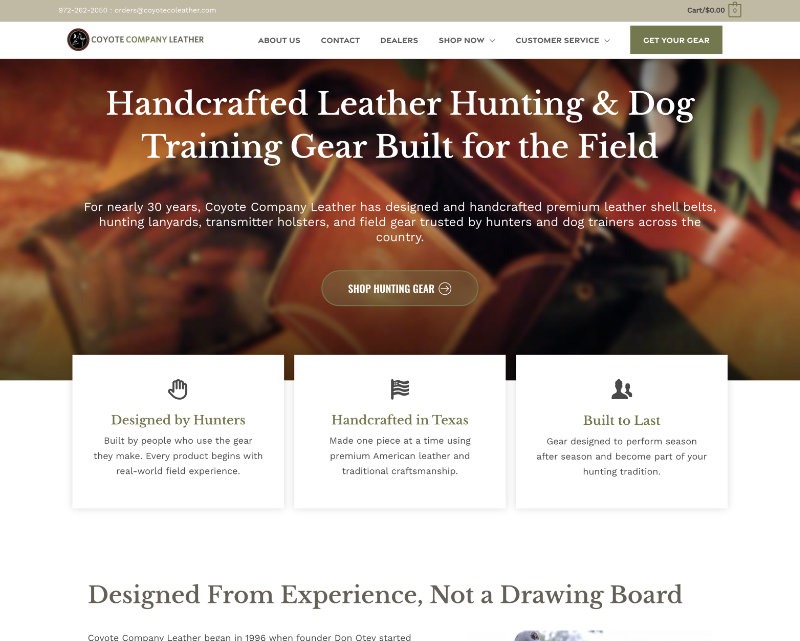
CASE STUDY 02 · ONLINE SALES & ECOMMERCE
Coyote Company Leather
Taking an established business somewhere it couldn’t go before.
Don had spent decades taking his products directly to customers. The opportunity wasn’t to change the business he’d built. It was to give that business another way to reach them.
Coyote Company Leather already had quality products, loyal customers and a reputation built over decades. What it didn’t have was a way for customers to find and buy those products when Don wasn’t standing in front of them at a trade show. An online store gave the business another sales channel without changing the craftsmanship and relationships it was built on.
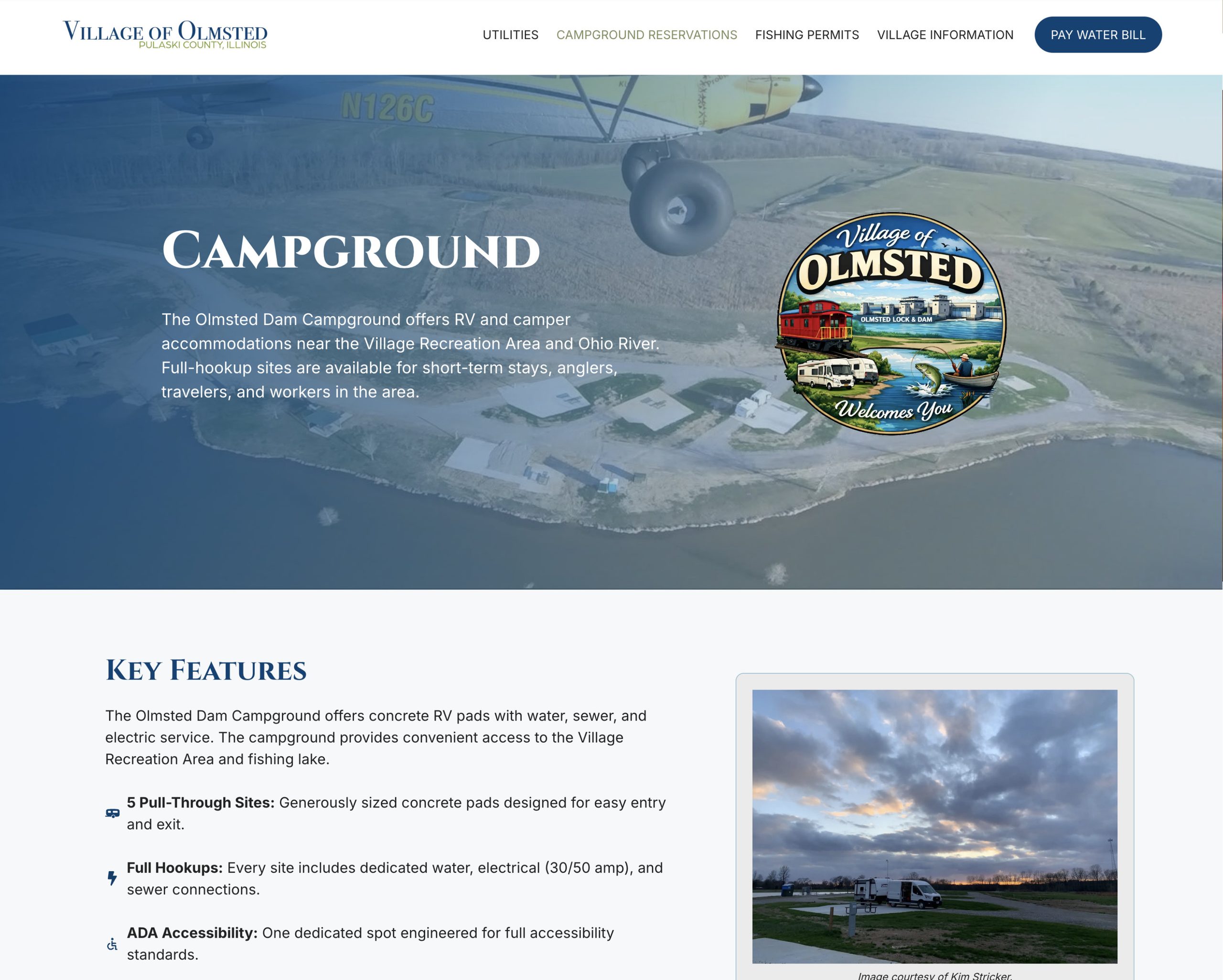
CASE STUDY 03 · CIVIC SERVICES & ADMINISTRATION
Village of Olmsted
Sometimes a better system can be a very simple one.
A small village didn’t need more technology to manage. It needed a few repetitive jobs to become easier without making everything else harder.
The Village didn’t need a complicated municipal system. It needed a few routine processes to work better for both the people using them and the small staff managing them. Simple forms, existing payment tools and carefully chosen automation could reduce repetitive work without creating a new technology problem for the Village to manage.